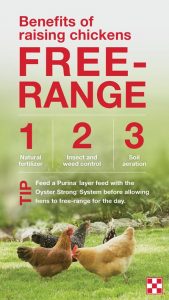
 Consistency is important for free-range chickens. Before opening the backyard chicken coop for the day, offer a complete chicken feed like Purina® Layena®, Purina® Layena® Plus Omega-3, or Purina® Organic crumbles or pellets. A complete chicken feed should comprise at least 90 percent of their overall diet. Make sure they eat their breakfast before foraging in the yard for dessert.
If you have free-range chickens and feed a complete feed, you do not need to offer grit. Chickens swallow food whole and break it down in the gizzard. If you feed a Purina® complete feed, you do not need to offer grit since the ingredients in a complete feed are already ground into small enough pieces.
Chickens are a great way to help control insects and weeds while providing natural fertilizer. Be aware their foraging isn’t limited to the plants you don’t like. You may need to fence off a small area to protect your garden and flower beds. When harvest is over, you can then open the gates and let the chickens enjoy.
Birds will gain more confidence each day and start to explore new places. Start with small periods of supervised time in the garden and work up to longer periods. Train your backyard chickens to come back to the coop by offering treats and using vocal cues. Maintain a routine with how and when you let the chickens free-range.
Training birds to know specific cues will help them return to the backyard chicken coop at night or during storms and maintain a balanced diet.
Turn chicken manure into organic fertilizer
Chicken manure is an excellent source of organic fertilizer for both the lawn and garden. Manure from free-range chickens can break down naturally in the yard, providing valuable nutrients for the lawn. The correct balance for free-range chickens is about 250 square feet of space per chicken.
To use chicken manure as organic fertilizer, consider creating a compost area. This process can reduce the nitrogen levels found in raw manure.
Composting chicken manure is an earth-friendly way to turn organic residues like chicken waste, leaves or bedding into a material that can be used to fertilize the garden. After placing materials into a compost bin, microorganisms break them into natural fertilizer with the help of heat and oxygen. When maintaining compost, remember to keep it enclosed.
How backyard chickens serve as a lawn aerator
Another benefit of raising chickens in your garden is soil aeration. This is because chickens naturally scratch and dig the soil to forage for seeds and bugs. During this process, mulch and compost are spread, soil layers are mixed and the ground loosens. Most importantly, it adds oxygen to the soil and reduces the particle size.
Raising chickens in the garden comes with a sense of pride and the joy of sustainability. By having chickens in your garden, you can have an all-in-one solution for a natural weed killer, organic fertilizer, natural insecticide, and lawn aerator. And with the right nutrition, chickens can make the best companions for your garden.
Imagine if you had an all-in-one solution for a natural weed killer, organic fertilizer, natural insecticide, and lawn aerator. Many of today’s gardeners have found this solution through backyard chickens.
The combination of chickens and a garden can create a strong backyard ecosystem. Along with fresh eggs and family fun, raising chickens provides a natural and simple way to add to a backyard’s health and beauty.
Read on to learn how backyard chickens can help your garden flourish.
How to care for free-range chickens
Because chickens naturally enjoy digging, we encourage protecting delicate and new or young plants as well as those with ripening produce. In addition, if there are certain areas you’d like to keep free of chicken manure or if certain plants should be off-limits, add a fence or chicken wire. A chicken tunnel through the yard is one option. Fencing can also help ward off predators.
Additional tips to protect young plants include rotating chickens through different areas of the yard, placing stones around plant bases or creating teepee-like structures over young plants.
Use free-range chickens to control pests and kill weeds
In addition to organic fertilizer and lawn aeration, backyard chickens offer organic pest control and act as natural weed killers in your garden and lawn.
The garden and chicken combination works well because chickens love a lot of the things gardeners do not, like weeds and insects. Chickens forage for seeds and bugs making them the perfect weed and bug control pet. They also eat small plants and clean up fallen fruit and green leaves.
Since chickens love many different types of plants, you should create a diverse plant ecosystem that includes several layers of plants. Layering should include cover, lush and shade plants. Plant layers may include trees, shrubs, perennials, ornamental grasses, annuals, vines, edible plants and ground cover. Well-planned plantings can provide soil stability and help filter rainwater runoff.
Considerations for cover plants are butterfly bushes, which grow fast, provide shade and are not eaten by chickens. Hawthorne has edible berries and leaves that chickens tend to avoid.
Some plants are not healthy for chickens. When it comes to toxicity, chickens will typically avoid poisonous plants. However, consider removing plants like poison ivy, boxwood, honeysuckle, nightshade, monkshood, oleander, tobacco and yew.
Want to learn more about raising backyard chickens? Download the “My First Year with Chickens” guide.
Source: Patrick Biggs, Ph.D. Nutritionist, Companion Animal Technical Solutions
Stop into Kissimmee Valley Feed for the highest quality supplies for your free-range backyard flock. We’re proud to carry Purina poultry feed products to keep your chickens healthy.



 UPDATE: Thanks to everyone who attended! Here is a link to access the photos from the event. https://photocoephotography.shootproof.com/gallery/10681169/
 Make plans to attend our hoppin’ Rabbit Workshop! This event is held on Saturday, September 7th, 2019 from 11:00 AM to 12:00 PM. Christine has prepared some great information to share with you. Whether you’re a first-time owner or you already own a few fuzzy tails, this is a great opportunity to come out and hear some new information! All ages are welcomed.
 Make plans to join us for a Sunglo Show Feed Event! On Thursday, August 29, stop by the store at 6:30 for a presentation by Pete and Jeff. They are our very own Sunglo representatives and are looking forward to talking with you. They are very knowledgeable about the industry and are prepared to answer all of your questions. Don’t forget to bring a notepad and pencil so you can jot down anything new you learn!
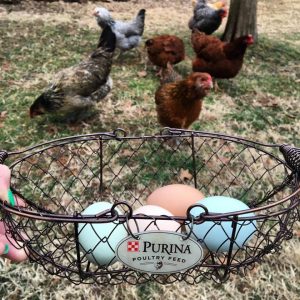 Whether you’re new to maintaining a backyard flock or simply have a few questions about regularly collecting chicken eggs, these tips from Purina will help you get the most out of your flock’s egg production.