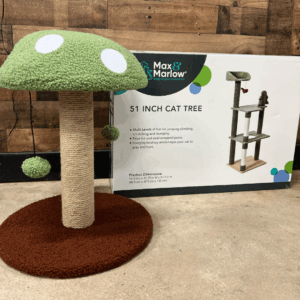
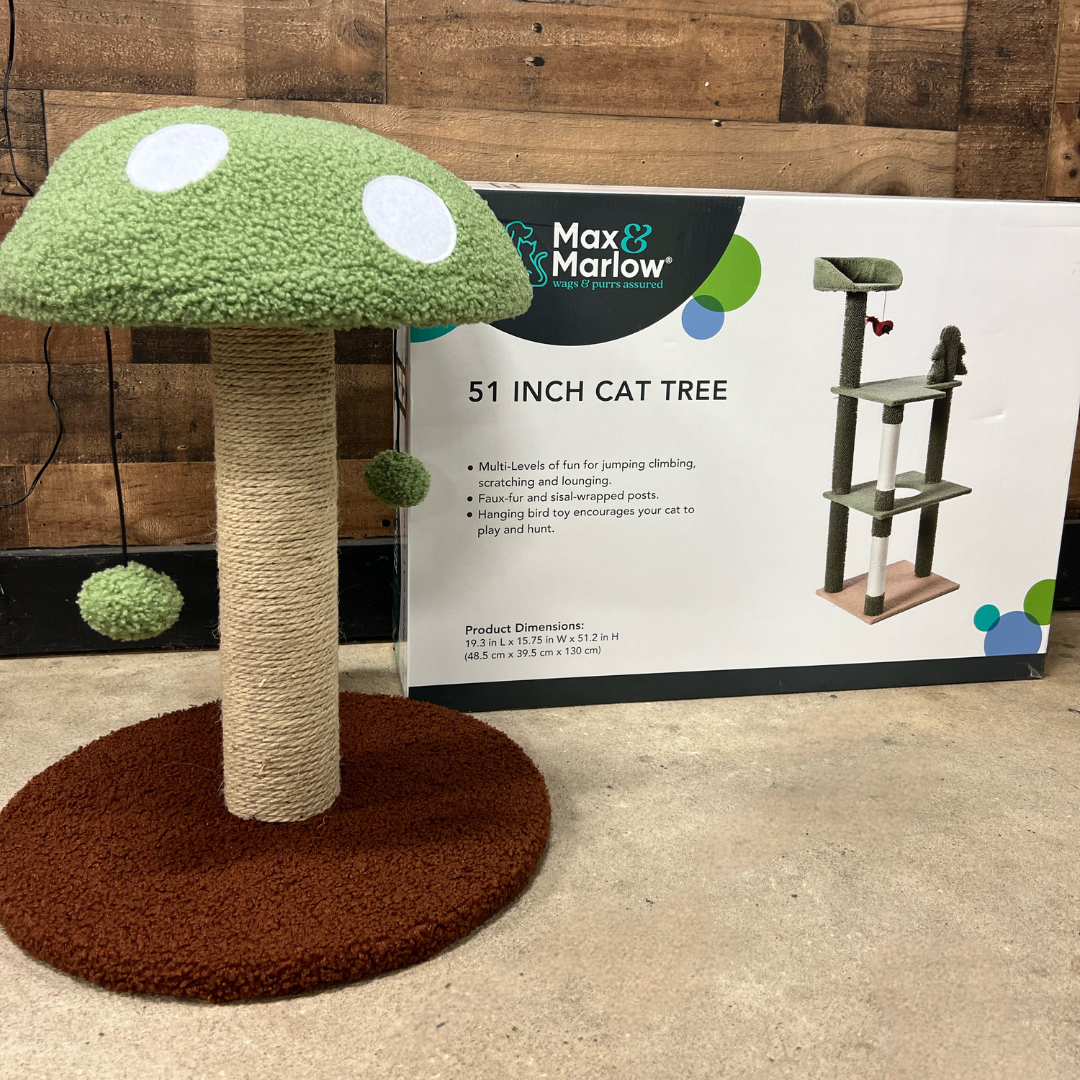
 Store #2 has Max & Marlow Cat Trees Available! Max & Marlow creates a variety of toys and furniture designed to encourage play, exercise, and ultimate comfort. We are excited to announce that we now carry their adorable and functional cat trees, perfect for giving your kitty a space of their very own. This post will explore why a cat tree is an essential piece of furniture for your pet and how Max & Marlow’s designs stand out.
Why Every Cat Needs a Cat Tree
Cats, by nature, are climbers, hunters, and creatures who crave security. In the wild, they would scale trees to survey their territory, escape threats, and find cozy, elevated spots to rest. Indoor cats retain these powerful instincts, and a cat tree is one of the best ways to help them express these natural behaviors in a safe and appropriate manner.
Providing a cat tree is not just about spoiling your pet; it’s about supporting their physical and mental well-being. A good cat tree serves multiple purposes, making it one of the most valuable investments you can make for your feline friend. It acts as a jungle gym, a lookout tower, a nail salon, and a private bedroom, all rolled into one.
The Benefits of Vertical Space
One of the most significant advantages of a cat tree is that it provides vertical territory. In a multi-cat household, access to high places can be crucial for establishing social hierarchy and reducing conflict. Cats often feel more secure when they can view their surroundings from above. An elevated perch gives them a sense of control and a safe retreat from household activity, whether it’s a running vacuum cleaner, an boisterous dog, or visiting children.
Max & Marlow cat trees are designed with various levels, offering multiple platforms for climbing and resting. This verticality encourages exercise as your cat leaps, climbs, and stretches to navigate the structure. This daily activity is vital for maintaining a healthy weight, keeping muscles toned, and preventing the boredom that can lead to destructive behaviors.
A Destination for Play and Exercise
Boredom is a common issue for indoor cats, and it can manifest in undesirable ways, such as scratching furniture, over-grooming, or aggression. Max & Marlow understands that a stimulated cat is a happy cat. Their cat trees are more than just perches; they are interactive play structures.
Many of their designs incorporate features that tap into a cat’s predatory instincts. You might find dangling toys that invite batting and pouncing, or cubbies and tunnels perfect for a game of hide-and-seek. These elements encourage solo play, ensuring your cat stays mentally engaged and physically active even when you’re not home. By providing an approved outlet for this energy, you help preserve your own furniture while giving your cat the workout they need.
The Perfect Place for a Cat Nap
After a vigorous play session, every cat needs a comfortable place to curl up for a nap. Cats can sleep up to 16 hours a day, so providing a cozy and secure resting spot is essential. Max & Marlow cat trees feature plush, soft materials that create an irresistible napping environment.
Their designs often include enclosed condos or bolstered perches that give cats a sense of security. These snug spaces allow your pet to relax completely, knowing they are safe and sound in their dedicated spot. By placing the cat tree near a window, you can provide both a comfortable bed and front-row seating for “cat TV,” where they can watch birds and squirrels outside.
Encouraging Healthy Scratching Habits
Scratching is a natural and necessary behavior for cats. It helps them shed the outer layers of their claws, mark their territory with scent glands in their paws, and enjoy a satisfying stretch. Without an appropriate surface to scratch, your cat will turn to your sofa, curtains, or carpet.
Max & Marlow cat trees are built with scratching in mind. Most of their models feature posts wrapped in durable sisal rope, a texture that cats find incredibly satisfying to dig their claws into. By integrating scratching surfaces directly into the furniture, the brand cleverly redirects this instinct away from your home furnishings. Placing the cat tree in a central area of your home encourages your cat to use it as their primary scratching post.
Introducing Max & Marlow Cat Trees
We are thrilled to offer a selection of Max & Marlow cat trees that are as stylish as they are functional. These pieces are designed to complement your home decor while providing your cat with the ultimate enrichment center. Whether you have a small apartment or a large house, a playful kitten or a senior cat, there is a Max & Marlow tree to fit your needs.
These adorable structures are built with quality materials to ensure stability and durability, even with the most enthusiastic climbers. The soft fabrics, sturdy platforms, and integrated toys make them an all-in-one solution for your cat’s needs.
Stop by and see our new collection of Max & Marlow cat trees today. Give your feline friend the gift of their own personal kingdom! A space where they can play, climb, scratch, and relax to their heart’s content. It’s the perfect way to show your love and enhance their world.


 Fall Pet Allergies: As the heat and humidity of the summer begins to wane, many of us look forward to the cooler, fall weather and, at least in the northeast, the beauty of the changing foliage. For many of us including our pets, this change of season is the start of fall allergies.