Archive for December, 2025

Featured Snake and Reptile Supplies

Tuesday, December 23rd, 2025

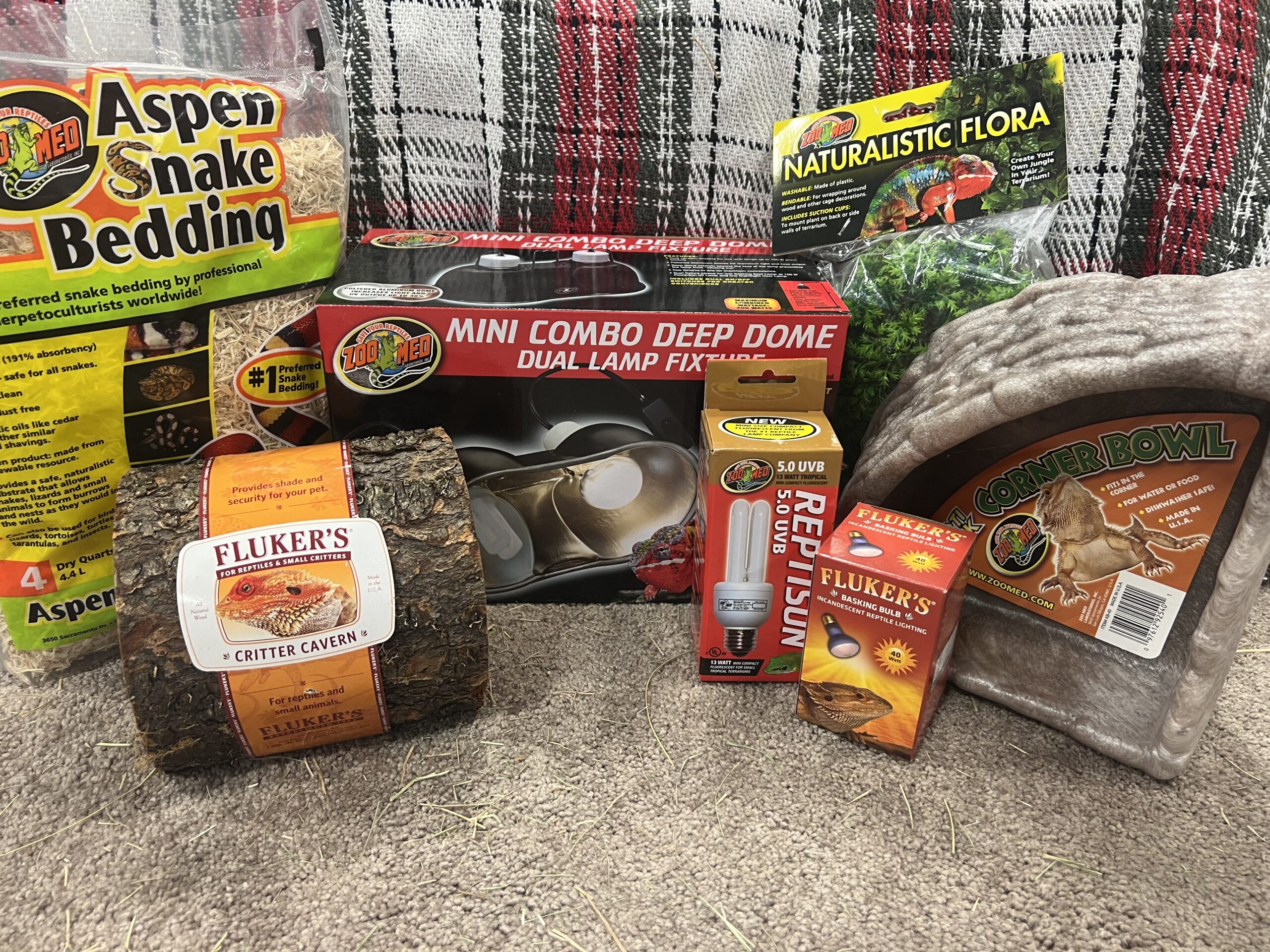
Nice shot of all the Featured Snake and Reptile Supplies - which are listed in detail.We have some featured snake and reptile supplies for you at Store #2. Perhaps you adopted a scaly friend at our recent reptile adoption event? Maybe you’ve had a reptile friend for years! Whatever the case – we have all the supplies you need to keep them happy and healthy! As reptile lovers, we know there is so much that goes into owning a snake – including necessary products to give them the best possible care.

Featured Snake Supplies

  1. Aspen Snake Bedding – #1 Preferred snake bedding by professional herpetoculturists worldwide! Provides a safe, naturalistic substrate that allows snakes, lizards, and small animals to form burrows and nests as they would in the wild.
  2. Fluker’s Critter Cavern Logs – These Critter Cavern Corner Logs are perfect for those hard-to-reach places, providing the perfect fit in the tiny corners of terrariums. Reptiles and amphibians love to hide out and these are perfect for that! Make your pet feel at home and buy this product today!
  3. Zoo Med Mini Combo Deep Dome Lamp Fixture – Zoo Med Mini Combo Deep Dome Lamp Fixture has two fixtures in one for maximum convenience! The dual fixture allows for one Basking Spot® Lamp or 100 w PowerSun™ UV Lamp. Plus, one Nightlight Red™ Heat Lamp.
  4. Zoo Med ReptiSun® 5.0 Mini Compact Fluorescent – Zoo Med ReptiSun® 5.0 Mini Compact Fluorescent is perfect for all tropical species of reptiles and amphibians! 5% UVB Output, 30% UVA Output, Full Spectrum. Lamp can be oriented either vertically or horizontally in your reptile hood or clamp lamp fixture. UVB emissions help prevent or reverse Metabolic Bone Disease and UVA increases feeding, mating, and other natural behaviors. Perfect for Mini Deep Dome Lamp Fixtures and Naturalistic Terrarium Hoods.
  5. Fluker’s Basking Spotlight Bulb – Fluker’s incandescent light bulbs provide the radiant heat (infrared light) that reptiles need.
  6. Zoo Med Natural Bush™ Plants – Zoo Med Natural Bush™ Plants – Cashuarina creates your reptile’s own little jungle! Your reptile will never know the difference. Natural Bush™ Plants provide hiding and resting places for all types of reptiles and amphibians. Small size is over 14″ (36 cm) long.
  7. Zoo Med Repti Rock Corner Bowl – Ensuring proper hydration is vital for the health of all captive animals, including reptiles, amphibians, and invertebrates. Clean, accessible water is essential for their well-being. The Zoo Med Repti Rock Corner Bowl offers a practical solution with its space-saving design. It’ll fit neatly into the corner of your terrarium.
Winterize Your Chicken Coop

Saturday, December 20th, 2025

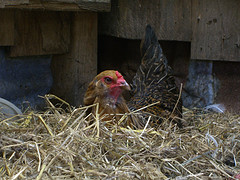
winterize your chicken coopIt’s time to winterize your chicken coop. Winter is upon us and egg production tends to slow down in late fall due to the shorter days. Lighting is a huge component to this decrease as well as the temperature drop. A laying hen’s endocrine system is stimulated by light so the shorter days slow egg production or can stop it completely. Some flock owners look at winter as a dormant break for their laying hens.  Other owners like to keep the production throughout the winter months. In order to do this, hens need more than 14 hours of light during the day.

Lighting:

A nine-watt compact fluorescent bulb is all that’s needed for a typical backyard coop. Plug the light into a timer and have it come on early enough in the morning to give the birds 15 hours of daylight, and egg production will be improved through the shorter days of winter.The light needs to light up the largest area possible. Clean the lamps once a week to keep them clean to output as much light as possible.

Heat Lamps:

Start this process in late fall since the lighting changes at that time. Make sure to hang the lamp or bulb up in the coop where the chickens can’t snuggle up to the lamp and cinge their feathers. Make sure the light reaches the whole coop and offers heat throughout.

Other Tips on Winterizing:

Keep the coop dry and clean. The best way to do this is to keep make sure the coop will not have standing water if rain comes. Make sure to replace the bedding with dry bedding each week.

Bedding also provides insulation for the chickens. Cover large holes where drafts or critters can enter. Be careful not to cover up all the holes so proper ventilation can occur.

Freezing temperatures can freeze up the water source. Think about getting a heated water source or pour fresh water each day.

It’s important to gather eggs daily because those can freeze as well.

Throw down extra feed or corn before they head to roost at night. This will provide energy and keep them warm at night.

Your flock needs some time and attention during the winter months to keep up with egg production. The extra work is worth it! You’ll have a full carton of eggs all winter!

Visit Kissimmee Valley Feed and check out our poultry supplies online to get a happy and healthy flock!


5 Tips to Get Your Horse to Drink More Water During Winter

Friday, December 5th, 2025

The following guide will help you to get your horse to drink more water during winter: Water is the most essential aspect of any horse’s diet. Without adequate water intake, horses will not survive.

An adult horse (1000 lbs.) in a cool, comfortable environment that is not working, or lactating, needs a minimum of seven to ten gallons of fresh, clean water every day.

The amount of water required is closely related to the amount of feed the horse has eaten. Most horses will drink 1.5 quarts of water per pound of dry feed intake. If a horse is consuming 20 pounds of dry hay per day, the horse would be expected to drink approximately 7.5 gallons of water each day. Although the water requirement is higher in certain cases. For example, if the horse is in training, nursing a foal, growing, pregnant or in a hot/humid environment. The best way to ensure adequate water intake is to always provide free access to fresh, clean water.

Issues associated with water intake during the winter months usually revolve around horses not drinking enough water. Water that has frozen or is near freezing will result in decreased intake. Water consumption reaches its maximum when the temperature is maintained between 45 and 65 degrees Fahrenheit. Similarly, horses that must eat snow as their only water source, will not eat enough snow to satisfy their necessary water requirement completely. This decreased water intake can result in digestive upset or “colic.” Associated with feed material becoming impacted (stuck) in the digestive system. Therefore, the water source should be free-flowing or heated. This will prevent freezing and guarantee the horse is drinking enough water. When installing a heating device for water, be certain that any electrical unit is properly grounded to prevent electrical shock of the horse. Horses are very sensitive to electrical shock and will quit drinking to avoid shock.

Here are few easy tips to assist with increasing your horse’s water intake:

  1. Wet your horse’s feed at a ratio of 2 parts feed to 1 part water. This can increase the hydration status of your horse.
  2. Offer a wet mash, every day, of soaked beet pulp shreds or pellets, timothy forage pellets or alfalfa forage pellets. If you are concerned about adding too many calories to an overweight horse’s diet, try soaking and offering teff forage pellets. Soak these forage or fiber sources at a ratio of 2 parts water to 1 part forage.
  3. Wetting down the long-stemmed hay you offer your horse can also boost water intake slightly.
  4. Flavoring your horse’s water can also encourage water intake, especially if you are traveling and have a picky drinker.
  5. Provide a salt block in your horse’s paddock or stall to help stimulate thirst.

Horses primarily eating hay will consume more water than those eating both hay and grain. Fiber increases the water holding capacity of the hindgut. Better quality hays, such as alfalfa, are typically higher in calories compared to grass hay. Other baled hay substitutes, such as forage cubes and pellets, can be fed to replace poor quality hay.

Standlee Premium Western Forage offers a wide variety of Alfalfa and Alfalfa mix products ranging from baled, long-stemmed forage, to cubes, pellets and chopped forage. Also available are Standlee Premium Smart Beet (beet pulp) shreds and pellets that increase the calorie content of the forage portion of the diet and are highly digestible.

If you have questions about how you can you to get your horse to drink more water during winter, please contact or visit Kissimmee Valley Feed today.

By Dr. Tania Cubitt
Standlee Nutritional Expert – Performance Horse Nutrition

Navigation


Share this page

Calendar

No event found!

Quick Info


Main Store
1501 Eastern Ave map

Saint Cloud, FL 34769..

Contact Info

Phone: 407-957-4100
Fax: 407-957-0450

Store Hours

Mon-Fri: 8:00 am - 6:00 pm
Sat: 8:00 am - 5:00 pm
Sunday Closed


Second Store
215 13th Street

St. Cloud, FL 34769

Contact Info

Phone: 407-892-4040

Store Hours

Mon-Fri: 8:00 am - 6:00 pm
Sat: 8:00 am - 5:00 pm
Sunday: Closed

Owner: Samantha Holloway
1501 Eastern AveSaint Cloud, FL 34769
Phone: 407-957-4100
Fax:407-957-0450

2nd Store
215 13th Street St. Cloud, FL 34769

Contact Info
Phone: 407-892-4040
Store Hours
Mon - Sat 9:00 am - 7:00 pm
Sun Closed