

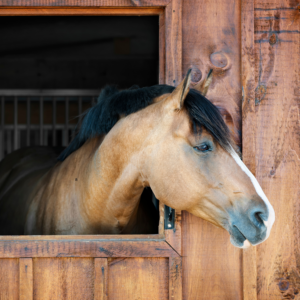
 Internal parasites are a common problem in horses, particularly those managed on pasture. In addition to being a nuisance, internal parasites can cause serious health problems. These health issues include conditions such as weight loss, poor performance, colic, and intestinal obstruction. Establishing and maintaining a routine deworming schedule for your horses is an essential step to keep them healthy. However, a good deworming program should be tailored to the individual horse. The program should be based on factors such as age, pasture type, climate, and management style. Strategic deworming takes these factors into account. Additionally, a good deworming strategy helps prevent the development of resistance and strives to keep the deworming medications you use on your farm effective.
Strategic Deworming for Horses
In the past, deworming horses often meant giving a broad spectrum deworming medication to every horse in the barn a few times each year. Nowadays, it is recommended that horse owners use a strategic deworming program that addresses the needs of each individual horse. A strategic deworming protocol involves three steps:
Plan
Planning is perhaps the most important step in any strategic deworming program. To start, your veterinarian can help you monitor fecal egg count for the horses on your farm. This easy testing will identify high, moderate, and low egg shedders, and this information will be used to determine the frequency of deworming needed for each horse. In addition to fecal egg counting, you will also need to understand the types of parasites that are prevalent in your region and their infection cycles. This will help you make informed decisions regarding your horse’s management and the types of deworming medications available to target these species.
Purge
Purging involves the use of a broad spectrum deworming medication such as ivermectin to interrupt the infection cycle and kill the parasites that are currently established in your horse. Purge dewormers like Farnam IverCare (ivermectin) Paste 1.87% target a wide variety of parasites including small and large strongyles, pinworms, ascarids, and bots in a single dose. This medication is easy to administer using the adjustable dosing syringe. The frequency of purge deworming should be customized to fit the needs of the individual horse. High egg shedders may need more frequent purges, while low egg shedders may only need a purge dewormer twice per year. Monitoring fecal egg counts before and after the use of purge dewormers can also be useful to identify resistant parasites and ensure the deworming medication you have chosen is effective.
Protect
Daily deworming medications such as Farnam PyrantelCare Daily Dewormer 2.11% (pyrantel tartrate) provides continuous protection against more than 31 of the most common species and stages of equine parasites. This product utilizes pyrantel tartrate, a safe and effective anthelmintic that targets large and small strongyles, pinworms, and ascarids. The palatable medicated pellets are simply added to the horse’s normal feed daily. Once ingested, the medication works in the horse’s digestive tract to control parasites and help to prevent parasites from migrating through your horse’s digestive system, which can cause serious damage. While daily dewormers are a great tool for controlling new parasite infections, they do not treat all stages of parasites. That’s why it is important to use these products in conjunction with a routine purge deworming plan.
Summary
There are many different deworming products on the market today. Choosing the best options for your horse can seem daunting. While there is no “one-size-fits-all” approach to equine deworming, a strategic deworming program is easy to implement. It will also provide your horse with protection to meet his unique needs. With the right products and a customized approach, you can have peace of mind knowing that you are doing what you can to help your horse remain healthy and protected from parasites.
Elizabeth Racine
Original article from Farnam.
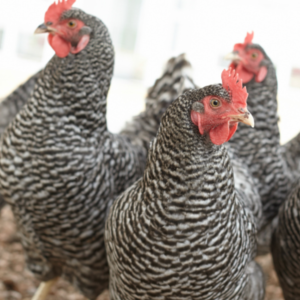 Switch laying hens to a complete chicken layer feed when they start laying eggs around 18 weeks of age. Choose a complete layer feed that includes all the essential nutrients laying hens need to lay strong and stay strong. Then make the transition gradually over one week.